

WEBSITE DEVELOPER
A web developer is a professional who builds, designs and maintains websites and web applications for businesses organizations and individuals. They use programming languages and development tools to create websites that’re functional, interactive, secure and easy to use. Web developers turn website designs and ideas into digital experiences that people can access through browsers. They take responsibility for building parts of a website, such as its layout, features, navigation, forms and interactive elements. Front-end developers focus on the part of a website. This includes design, buttons, menus, animations and user experience. Back-end developers work behind the scenes. They manage servers, databases, APIs and the functions that make a website run. Some developers work as full-stack developers. These professionals handle both end and back-end development tasks. Web developers also make sure websites look and work well on devices. This means they make websites responsive so they work smoothly on desktops, tablets and mobile phones.They pay attention to website speed, security, performance, accessibility and how well the site works in different browsers. Web developers often use technologies, like HTML, CSS, JavaScript, PHP, Python, React, WordPress and databases. They also fix issues, update website features keep existing websites running and ensure everything keeps working correctly. A professional web developer combines technical knowledge with creativity and problem-solving skills. This helps them build digital solutions. For businesses a developed website can strengthen their online presence improve customer experience and support long-term digital growth.
TYPES OF WEBSITE
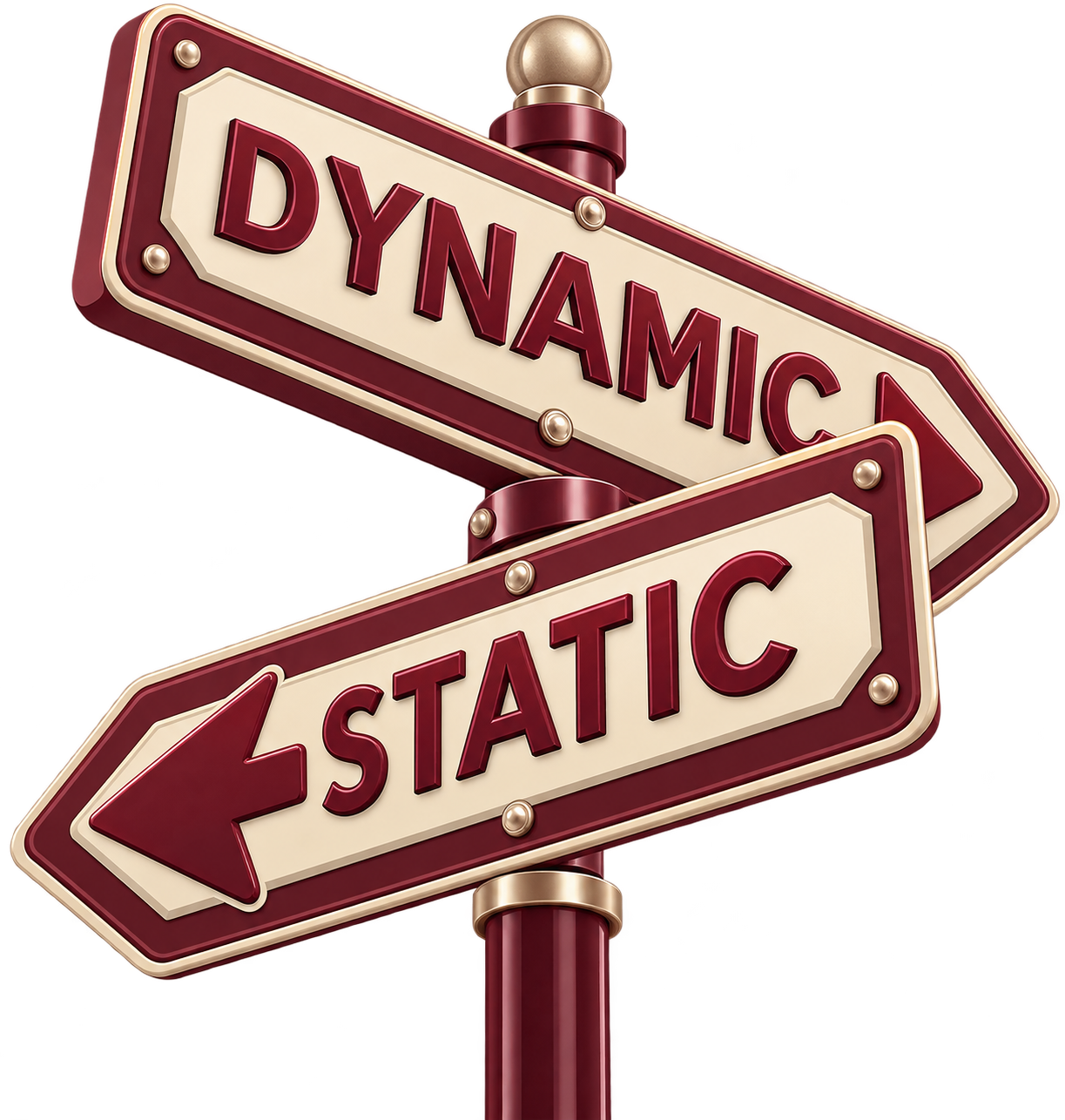
STATIC WEBSITE
A static website is a type of website where the content stays the same unless a developer manually updates a static website. I build a website mainly using HTML, CSS and JavaScript to create clean and easy web pages. A static website usually loads faster because it does not have to process database requests for every visitor. I use a website for businesses, portfolios, landing pages, personal sites and informational sites. Every page on a website shows the same content to visitors unless I change the files directly. A static website is easier to host and needs server resources. When a static website is built correctly it can offer performance, security and reliability. Though a static website has limited features I can still add interactive parts with JavaScript or external services. Overall a static website is an efficient choice, for businesses that need a professional online presence with simple content.
DYNAMIC WEBSITE
A dynamic website is a type of website where the content and information change automatically. This happens based on what the user does updates in a database or other conditions. Unlike websites, which show the same content to everyone dynamic websites use server-side programming, databases and APIs to create personalized and interactive experiences. These websites are often used for e-commerce stores, social media sites, news websites, booking systems and web apps. Website owners can easily update products, blog posts, images and other information using a database or a content management system. Technologies like PHP, Python, Node.js, JavaScript, MySQL and React are commonly used to build these sites. Features such as login systems, search tools, shopping carts, payment processing and user dashboards are common, in websites.
CATEGORIES OF WEBSITES
E-Commerce Websites
E-commerce websites help companies sell things on the internet. They usually have lists of products, carts where people put items ways to pay accounts for customers and systems to handle orders.
Business Websites
A business website holds details about a company. It shows what the company does. It tells about the services offered. It lists the products available. It gives contact information. It shows the brand identity.
Social Media Websites
Social media websites let people make profiles. They can share posts, photos, videos and messages. These sites are built around what people create themselves—like comments, stories and updates.
Blog Websites
Blog websites are made to share articles, opinions, guides, news and educational content. Businesses and individuals often use blogs to give out information and draw in visitors using search engines.
WHAT IS DOMAIN ?
A domain is the name or address that people use to visit a website on the internet. For example google.com, amazon.in and futurixmedia.com are domain names. Of remembering a websites complicated IP address users can simply type its domain name into a browser. A domain usually consists of two parts: the name and the domain extension. Common extensions include.com,.in.org.net and.co.in. For businesses in Prayagraj a domain such as yourbusiness.in can help create an online identity. A domain name should ideally be short, memorable, relevant and easy to spell. Businesses can use domains to create websites, professional email addresses and online brand identities. A domain is different, from web hosting because the domain is the websites address while hosting stores the websites files. Domains are registered through domain registrars. Generally need to be renewed periodically. Choosing the domain can improve brand recognition and credibility among customers. Overall a domain acts as your address helping people easily find and connect with your business online.

WHAT IS HOSTING

Web hosting is a service that gives you space and the tools you need to keep a website’s files on a server and let people reach them on the internet. When you build a website for a business in Prayagraj web hosting lets customers reach it at any time by typing its domain name into a browser. A web hosting server keeps website files like HTML, CSS, JavaScript, images, videos and databases. When someone visits your website the web hosting server sends those files to their browser. Web hosting comes in kinds, such as Shared Hosting, VPS Hosting, Cloud Hosting and Dedicated Hosting. Shared hosting is usually best for websites and beginners because it is cheap and simple to handle. VPS hosting and cloud hosting give you power and flexibility for websites and businesses that are growing. Dedicated hosting gives a server to one website giving you more control and better performance. Good web hosting can make your website safer more reliable and overall perform better. It also gives features like SSL certificates, backups, email accounts, storage and technical help. Overall web hosting is the home where your website stays letting people reach it from anywhere.
Explore Hosting Options for Your Website
SHARED HOSTING
Shared hosting lets many sites share the server. Shared hosting is an easy choice, for beginners. Shared hosting works well for businesses, blogs, portfolios and websites that have moderate traffic.
VPS HOSTING
VPS hosting gives your website dedicated resources on a shared physical server. This setup provides performance and more control than shared hosting. I find VPS hosting ideal, for growing businesses, high‑traffic websites and web applications.
DEDICATED HOSTING
Dedicated hosting gives one website or business a physical server all to itself. This setup gives the possible performance and the most control. It works well for companies, websites that get a lot of visitors online stores and programs that need a lot of resources.
CLAUD HOSTING
Cloud hosting uses a network of servers to host websites and applications giving better flexibility and reliability. Cloud hosting can easily handle traffic increases by spreading resources across servers. Cloud hosting is perfect, for growing businesses, high‑traffic websites, e‑commerce platforms .
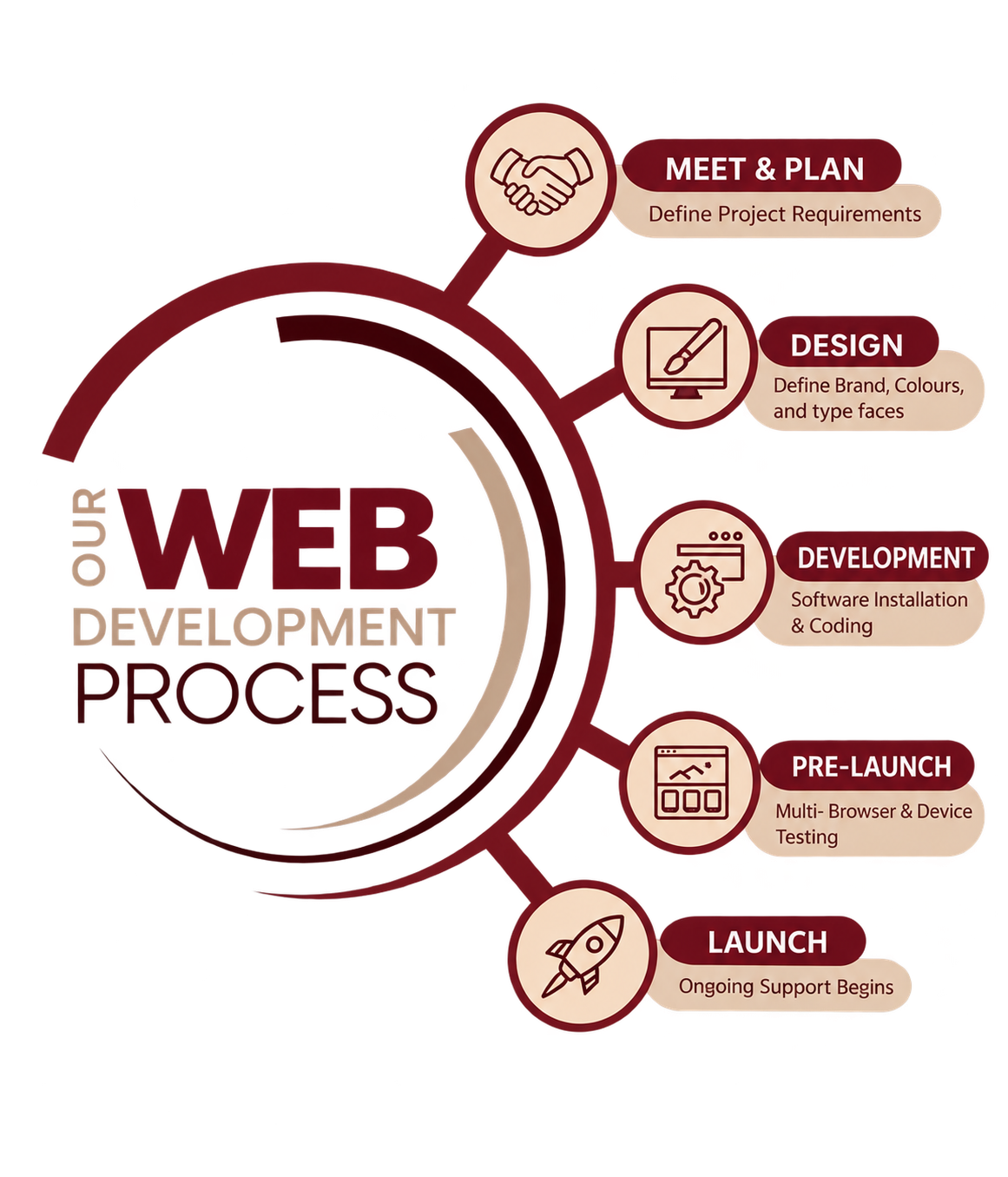
Website Development Process
1. Meet & Plan
We talk about your business goals, your target audience, the features you need and the project requirements. This conversation builds a development roadmap, for your website.
2. Design
We design a attractive user‑friendly website. The design follows your brand identity, your colors, your typography and your overall vision.
3. Development
Our developers turn the approved design into a website. They use technologies, clean coding practices and essential integrations.
4. Pre‑Launch
Before the website goes live we test the website on browsers and devices. We check for responsiveness, speed, functionality, security and a smooth user experience.
5. Launch
Once the website is approved and tested we launch the website. We also ensure the website is properly connected to your domain and your hosting.
F.A.Q.
Web development is the process of creating, building, and maintaining websites and web applications. It includes website design, coding, functionality, security, and performance optimization.
A professional website helps establish your online presence, build credibility, showcase your services, and make it easier for potential customers to connect with your business.
We can develop business websites, portfolio websites, e-commerce websites, landing pages, blogs, dynamic websites, and custom web applications based on your requirements.
Yes. We can build websites with SEO-friendly structures, responsive layouts, optimized page elements, clean code, and performance considerations.
CMS development involves creating or customizing a Content Management System that allows website owners to manage content without directly editing website code.

Contact Detail
- 194 kalindipuram rajrooppur
- www.futurixmedia.in
- 7905361793
© 2026 Created with futurixmedia