Author name: @Shubhi

Uncategorized

How Social Media Can Support SEO

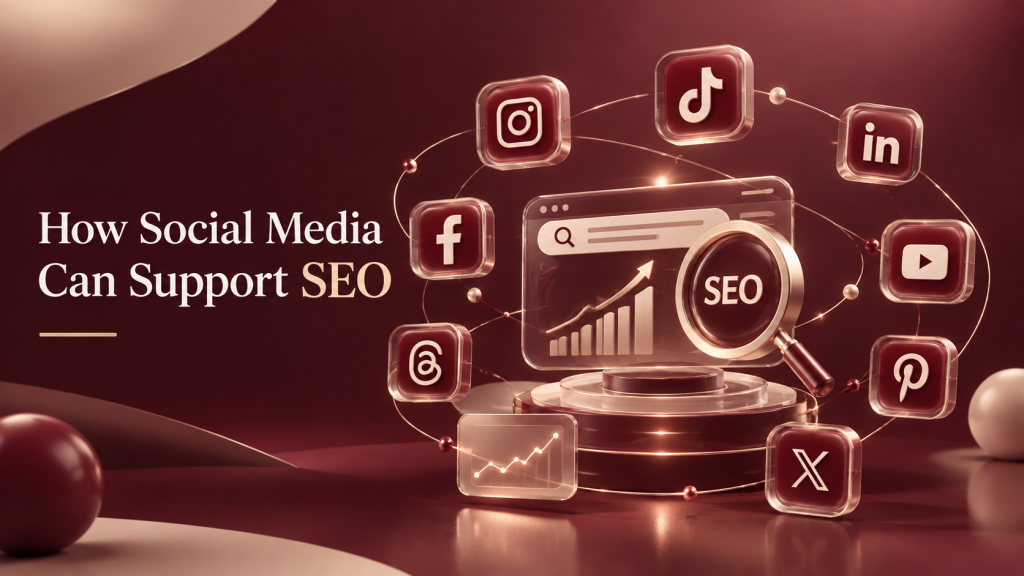
How Social Media Can Support SEO Yes social media helps SEO in a way. Even though numbers from platforms like likes, retweets and the number of people following a page are not direct factors that Google uses to rank websites sharing content on social media makes new content get found faster. It brings in visitors who’re interested, in what is being shared. It also makes more people know about the brand. It makes people search for the brand on Google. It also shows the content to people who create content and to journalists who might link to it. Direct Ranking Factors Algorithmic elements evaluated directly by search engine crawlers: technical crawlability, mobile responsiveness, HTTPS security, on-page topical relevance, core web vitals and earned dofollow backlinks from authoritative domains. Indirect SEO Benefits order human and brand effects include fast content distribution more branded search queries, on Google, stronger brand recall, higher-quality referral traffic and PR efforts that lead to independent editorial mentions. How to Build a Social Media + SEO Strategy (11-Step Framework) Define Organic Goals. Break down team silos-  Stop measuring SEO on rankings and social purely on likes. Align both channels around organic sessions brand recall and pipeline revenue. Research Qualitative Audience Questions-  Analyze customer support tickets, Instagram. Linkedin debates to identify specific confusion points before writing a single word. Perform Semantic Keyword Research-  Validate user questions against search volumes identifying high-intent long-tail keywords and secondary topical clusters. Create High-Quality Cornerstone Website Content- Publish a authoritative pillar guide on your owned website that answers user intent comprehensively with original frameworks and schema markup. Repurpose Content for Channel-Native Psychology- Deconstruct the core pillar into social formats: LinkedIn carousels, Instagram visual cards, vertical video reels and punchy threads. Distribute Content Strategically Across Channels- Coordinate distribution across optimal publication times without dumping links everywhere. Provide self-contained value within the post itself. Actively. Moderate Discussion- Reply to every comment debate differing perspectives. Thank community members for sharing. Meaningful comment threads expand platform reach. Identify Content Amplification Opportunities- Spot which organic social pieces resonate most. Allocate modest promotional budgets to boost high-performing assets to targeted industry personas. Build Relationships with Creators and Journalists. Tag original data sources, share commentary with journalists on X and LinkedIn and pitch your deep-dive research to relevant industry newsletter curators. Monitor Organic Search, Referral and Brand Metrics- Use Google Search Console and GA4 to track branded query spikes, referral conversion rates and new referring domains originating from PR. Continuously Update and Refresh the SEO Pillar. Feed qualitative. Counterarguments uncovered during social discussions back, into the original website article to maintain fresh topical authority. How Social Media Can Support SEO: 12 Proven Mechanisms High-Velocity Content Distribution I know that writing a blog post or research whitepaper is only half the work. If you do not share it the best analysis may sit unread for months. Social media gives your content an instant high-velocity content distribution runway. Than waiting for Google to find and rank the page you actively push the content into lively industry feeds creating high-velocity content distribution. 2. Accelerated Content Discovery and Indexation When a new URL gets social traffic—clicks, re‑shares, comments and profile visits—it creates an active digital trail across the internet. Search engine bots often. Crawl new URLs through secondary referral paths and public discussion forums, which quickens the time from first publication, to indexation. 3. Driving Qualified Website Referral Traffic Every visitor who clicks a link in a LinkedIn document Instagram bio or YouTube description becomes a session. Google does not make pages rank higher just because they get clicks but this referral traffic is very valuable, for business. It lets you build email subscriber lists collect first‑party data and talk to prospects before your organic search rankings get better. 4. Expanding Brand Awareness and Cognitive Recall Organic search often feels like a transaction. People look for a solution click a link, skim the page and then go away. Social media is good, at building brand affinity and giving repeated touchpoints. When people see your agency or clinic share frameworks again and again your brand name stays in their memory. 5. Stimulating Branded Organic Searches Brand awareness plays a role in driving branded searches. When people remember your brand name they stop using search terms like “best digital marketing agency” or “dental clinic near me.” Instead they type in phrases such, as “Futurixmedia agency” or “Dr. Sharma dental clinic reviews.” These direct searches show search engines that your brand is recognized and trusted. This kind of traffic is not more relevant but also converts better. Over time a growing number of branded searches signals real-world demand. It boosts your visibility. Helps you stand out in organic search results. 6. Unlocking Earned Editorial Backlink Opportunities Let us be fully clear: social media shares are not the same as backlinks. A tweet or Facebook post does not transfer PageRank.. Who consumes social media? Journalists, bloggers, newsletter editors and podcast hosts. When you share surveys, proprietary data or unique industry breakdowns content creators discover your work and cite your domain as an authoritative source, in their own publications. Earned Editorial Backlink Opportunities grow when these creators reference your domain. 7. Mining real-time search intent and content ideas Social media comment sections, polls and discussions are a place where audience pain points are shared. When followers ask questions, like “How does clear aligner treatment actually cost?” or “Can I run Google Ads without an agency?” they are giving you confirmed search intent. You can take these real-time questions. Turn them into specific SEO blog topics that rank for high-intent long-tail keywords. 8. Digital PR and Industry Authority Amplification Traditional public relations moved slowly. Cost a lot of money. Now digital PR happens on sites like X, LinkedIn and Threads. By mentioning experts in the field posting pictures of parts of reports and adding opinions on popular subjects your brand becomes the place people turn to for ideas. This leads to chances to be, on podcasts being written about in news
Uncategorized

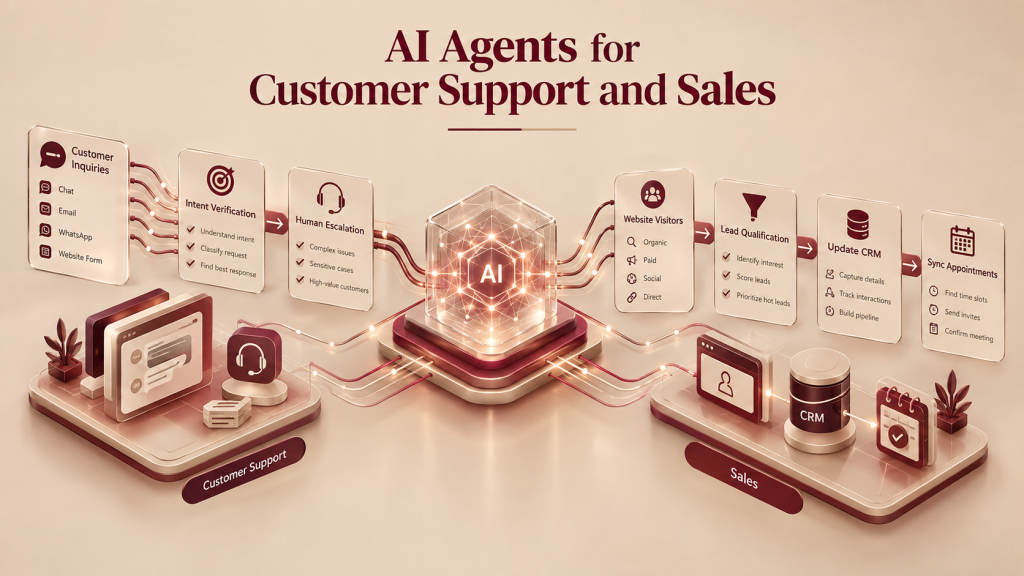
AI Agents for Customer Support and Sales

What Are AI Agents for Customer Support? An AI customer support agent is an AI-powered system designed to assist service teams by understanding customer inquiries, retrieving verified information from approved knowledge repositories, executing permitted support tasks, and escalating complex issues to human agents. Of making customers go through long phone trees or endless FAQ pages today’s support agents manage tasks throughout the entire service journey. Direct Inquiry Handling:-  They understand questions written in everyday language and give clear answers using trusted company documents. Customer Verification & Data Retrieval:-  They check if a customer has a subscription or get real-time updates on delivery status by using secure API connections. Ticket. Smart Routing:-  They examine tickets to mark how urgent they are what the customer feels and what the issue is about. Then they send cases straight to the right team. Basic Troubleshooting:-  They walk customers through step-by-step fixes for things, like software setup or restarting devices. Proactive Follow-Ups:-  After suggesting a fix they reach out again to make sure the problem is really solved before closing the ticket. What Are AI Sales Agents? An AI sales agent is a computer-based system that helps with the sales process by talking to people who might want to buy a product answering questions about the product checking if potential customers fit business rules updating customer records and setting up meetings, for real sales people. In sales work real sales people spend about two-thirds of their time doing tasks like entering information looking up leads writing emails and trying to get meeting confirmations. An AI sales agent helps the team by taking care of first-step tasks:   Real-Time Conversations Engage visitors when their buying interest is highest, 24 hours a day.   Automated Lead Qualification Collecting budget, timeline and company size naturally, without annoying forms.   Calendar Coordination I check the calendar in time and book discovery sessions so you do not need to send many emails back and forth.   Clean CRM Hygiene Clean CRM Hygiene means you enter contact details, pain points and the current pipeline stages directly into tools such, as HubSpot or Salesforce. How AI Agents Work in Customer Support and Sales Deploying an AI agent is not about turning on an API. A strong agent works through a ten-step process that is built for safety, accuracy and matching business goals: 1. Receive Inbound Request:-  Gets the question or message from website chat, email, helpdesk or other messaging tools. 2. Understand Intent & Tone:-  Looks at what the user’s trying to say what information they need how urgent it is and how they are feeling. 3. Assemble Context & History:-  Gets past information like purchases what level of service the user has or any tickets that are still open. 4. Access Authorized Knowledge:-  Checks trusted files, product information and knowledge sources. 5. Formulate Multi-Step Plan:-  Figures out the order of steps to solve the problem or pass it on to a person. 6. Invoke Permitted Tools & APIs:-  Uses software like calendar apps, CRM systems or shipping trackers in a safe way. 7. Execute Guard railed Action:-  Does the allowed task but only within the rules that limit what can be done. 8. Evaluate Outcome:-  Makes sure the action worked didn’t work or needs details. 9. Deliver Resolution OR Escalate:-  Gives the answer. Sends the conversation to a real person if needed. 10. Record Audit Trail, in CRM:-  Saves the conversation, tags and what happened into the database. AI Agents vs Chatbots vs Traditional Automation How AI Agents Are Changing Customer Support 1. 24/7 Customer Assistance Customer problems do not follow a workday. AI customer support agents are available around the clock—midnight, weekends and across time zones—without needing staff to handle simple repeat questions. 2. Faster Responses When a customer faces a service outage or account issue, quick feedback and fast fixes matter. AI agents read messages instantly reducing response times from hours to seconds for questions. 3. Personalized Support By connecting to verified customer data AI agents can offer answers that fit the individual. Of giving a general reply they can use the customers name mention their plan and include recent activity. 4. Automated Ticket Routing Some issues need an expert. AI agents review tickets judge how technical or urgent they are check the customer’s importance and send the ticket to the right person with a short summary. 5. Knowledge Retrieval Help documents can be long and scattered—across help centers, release notes and forums. AI agents use search to find correct trusted answers from official sources so customers don’t have to read through unrelated content. 6. Proactive Customer Support AI can spot problems before customers report them. For example if someone keeps failing to check out or has repeated onboarding errors the system can offer help away keeping frustration from building. 7. Human Escalation Good support systems know when to involve humans. AI agents are set to hand off conversations, in situations: When a customer is very upset or asks directly for a human manager. When there is a billing problem a cancellation threat or a legal message. When technical setups are sensitive. Mistakes could cause big issues. When a customer is a high-value VIP. Needs special attention. When the AI is unsure of the answer and confidence is low. How AI Agents Are Changing Sales Instant Lead Response Contacting leads within the first five minutes greatly improves the chances of making a sale. AI sales agents reply in seconds connecting with customers when they are most interested. 2. Lead Qualification of making visitors fill out strict forms with eight required fields an AI sales agent has a natural flexible conversation to collect important details like budget, project schedule and decision-making power. 3. Lead Research Before a prospect talks to an account executive an AI agent can gather information about the company, size of the business recent news and industry focus from sources making a complete preparation file for the human sales person. 4. Personalized Sales Conversations Unlike fixed

Uncategorized

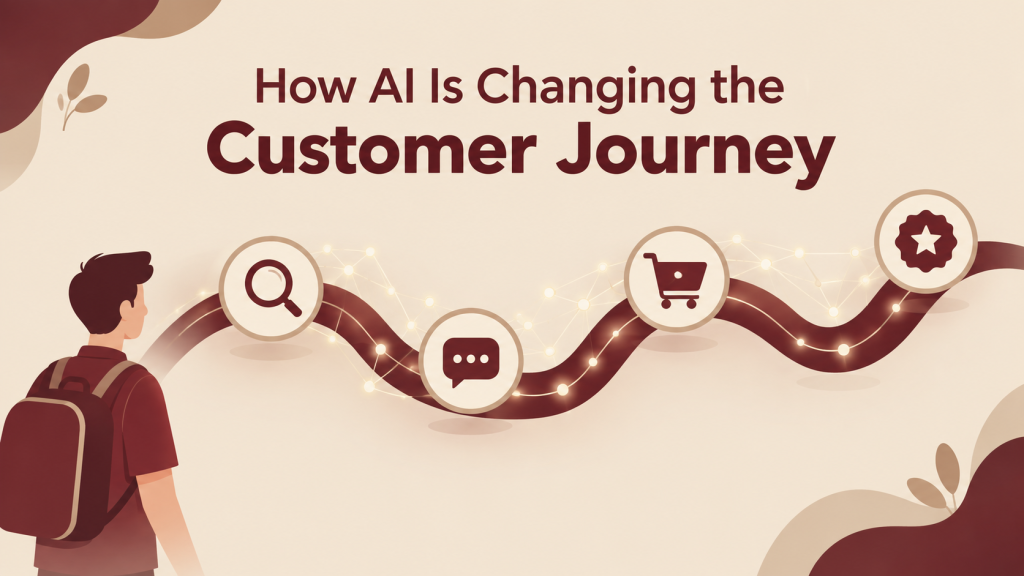
How AI Is Changing the Customer Journey

How AI Is Changing the Customer Journey I see a customer today discovering your brand through an Instagram reel asking a chatbot at midnight comparing your brand to a competitor using an AI search summary and finally buying from your website three days later. Without filling out a contact us form. That is not a hypothetical; that is how customers already behave. For years marketers talked about the customer journey as a path: a person becomes aware of a brand considers it decides, buys and hopefully returns. That model still holds true in principle. The way customers move through it has changed. Customers now talk to brands across Google, social media, websites, mobile apps, chatbots, messaging platforms, AI‑powered search tools and email. Often jumping between several of these in the day. This is why I think understanding how AI is changing the customer journey matters for every business, not just large enterprises. AI has moved from being a nice to have feature, to becoming the layer that connects data, timing and communication across every stage customers go through. This article breaks down what an AI‑powered customer journey actually looks like how AI affects each stage from awareness to advocacy what technologies are involved and how businesses. Including growing ones. Can start using AI without losing the human side of their brand. What Is the Customer Journey? The customer journey is the path a person follows from the moment they first hear about a business to the point where they become a repeat customer or someone who speaks highly of that business. In its basic form it goes like this: Awareness → Consideration → Decision → Purchase → Retention → Advocacy Think of a simple example: someone searches for “best dentist near me ” reads a few online reviews looks at the clinic’s Instagram page books an appointment has a positive experience and later tells a friend about the clinic. That’s the customer journey in life. And it works the same way for a software product, an online store or a local dental clinic. In the past companies saw this journey as a line. They built marketing funnels. Expected customers to move smoothly from one step to the next.. In reality people don’t follow that path neatly. They jump back and forth between stages. They might skip a step entirely. Or they could start the journey in a different way. Maybe they see an ad on social media then later find the business through a friend’s recommendation. This messy non-linear pattern used to be hard to track.. Now artificial intelligence is helping businesses understand and respond to the real way people move through the customer journey. AI fills the gap, between how companies thought the journey worked and how it actually works. What Is an AI-Powered Customer Journey? An AI powered customer journey is a customer experience where AI looks at behavior, data and context in time to tailor content, suggestions, timing and communication, at every stage. Of using fixed rules or generic messages AI does the work. In practice AI gives life to touchpoints that used to be fixed. A product page that used to display the items to every visitor can now show different recommendations based on how the visitor browses. A support widget that used to follow a script can now grasp intent and reply in a conversational way. An email campaign that used to send to the list at nine a.m. Can now be sent at the time that each person is most likely to open it. Traditional Customer Journey vs AI-Powered Customer Journey — quick comparison: One useful way to look at it is like this: traditional customer journeys usually follow a path but AI helps companies react in real time to what customers want what they do, where they are and what they have done before. The journey doesn’t really change its shape much as it becomes flexible. It shifts, on its own depending on what a particular person actually does. How AI Is Changing Every Stage of the Customer Journey Stage 1: Awareness This is where AI influence begins, often before a customer even knows a brand exists. AI helps businesses:  Identify audiences by looking at patterns among customers not only by demographics  Analyze signals of behavior such as browsing, engagement and past purchases to predict who might be interested  Optimize ad spend automatically by moving budget toward audiences and placements that perform best  Personalize creative and messaging according to audience segments  Predict interests using historical and behavioral data instead of guesswork Platforms such as Google Ads and Meta Ads already use machine learning to decide who sees which ad and when. This is one of the most mature examples of AI inside the awareness stage. Stage 2: Discovery Discovery has changed the most in the two years. People no longer only search; they ask. AI search and conversational search:-  Tools such as Google’s AI Overviews and AI chat assistants now summarise answers directly. This means brands must be understandable to AI not visible in rankings. [Internal Link: SEO Services] recommendations:-  Social platforms and marketplaces show content and products based on individual behaviour not only popularity. Discovery:-  Short‑form video platforms use AI to match content to viewers likely to engage with it. [Internal Link: Social Media Marketing] Content recommendations:-  Blogs YouTube and news feeds increasingly rely on relevance scoring. For businesses discoverability now depends on being structured and genuinely useful, to both people and AI systems that read your content. Stage 3: Consideration Once a customer learns a few options AI helps narrow the decision:  AI‑powered product recommendations that look at what similar customers have bought  Personalized content such as comparison guides or use‑case pages that show up after a visitor has looked at certain items  Chatbots that answer specific questions right away instead of asking customers to wait for an email reply  Virtual assistants that help compare features or plans side by side  Predictive insights that signal which leads are close to

Uncategorized

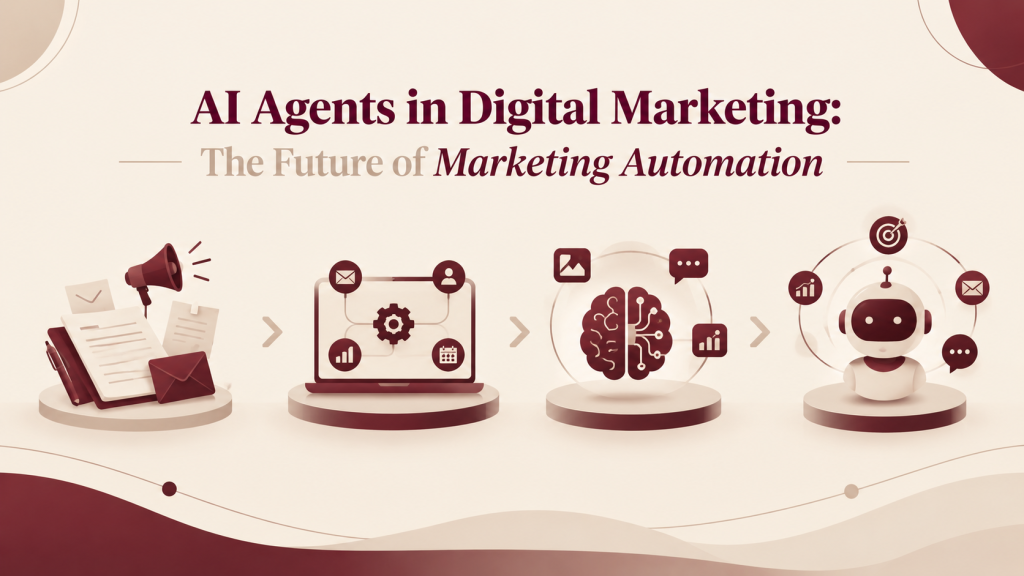
AI Agents in Digital Marketing: The Future of Marketing Automation

AI Agents in Digital Marketing: The Future of Marketing Automation Marketing has moved through a predictable series of shifts. First everything was manual. Every email sent by hand every report built from scratch. Then came marketing automation: rule‑based systems that could send an email after someone downloaded an ebook or move a lead to a stage after a form fill. After that AI‑assisted marketing arrived. Tools that could draft a blog post generate ad copy or summarize a report when a marketer asked. Now in 2026 a lot of the conversation has shifted to AI agents and agentic workflows. Systems that depending on how they’re built and what permissions they are given can go a step further than generating a suggestion. They can plan a sequence of steps pull in relevant data use a connected tool take an action and check whether that action worked before deciding what to do next. That does not mean marketing has suddenly become autonomous. What it means is that some of the multi‑step work marketers used to do by hand. Or manage through rigid automation rules. Can now be handled by a system that adapts a little more intelligently within limits a human sets. This article explains what AI agents actually are, how they are different from the AI tools and automation you may already use where they realistically add value in marketing what the risks are and how a business can start using them responsibly. Without treating them as a replacement, for marketing strategy or human judgment. What Are AI Agents? An AI agent is a software system that receives a goal. Then the AI agent plans and carries out a series of steps. Often using tools or data. To work toward that goal. The AI agent evaluates results along the way. Adjusts the AI agent’s next action based on what the AI agent finds. Unlike an AI tool that answers one prompt at a time an AI agent is built to handle a small workflow rather than a single response. A simple way to picture it: Goal → Understand → Plan → Use Tools → Take Action → Evaluate → Adjust For example a marketing team might give an AI agent a goal such as: “Check which blog posts lost traffic this month and flag the top three for review.” The AI agent must understand the request plan how to retrieve the data use an analytics tool or connected dashboard evaluate the results and provide a summary. The AI agent may also flag the summary for a human to confirm before any changes to content are made. It is important to note that the abilities of an AI agent differ widely. This depends on the system the tools the AI agent is linked to and the permissions the AI agent has. Not every AI agent on the market today can do all of this reliably. Many current implementations are narrower, than the word “AI agent” suggests. What Is Agentic AI? Agentic AI is the idea behind AI agents. Systems built with some level of independence to work toward goals not just give one answer to a question. There are a few differences between agentic AI and generative AI or old-school automation. Generative AI, like a chatbot or a text generator usually works on one request at a time. It waits for a prompt before doing anything else. It won’t go off. Check a result or take a next step unless someone tells it to again. Agentic AI on the hand can plan a series of steps pick the right tool for each step and keep working toward a goal by doing multiple actions in a row. It doesn’t need to stop after one task. Traditional automation runs on fixed rules. It doesn’t. Adapt. If something unexpected happens, it. Fails because it wasn’t programmed to handle it. Planning and the ability to use tools are what make agentic AI powerful. These features let the agent do multi-step work instead of just a single task. Permissions and human oversight are just as important. An agent that can actually do things. Like send an email update a customer record or change an advertising budget. Needs rules, about what it can and can’t do. It should not act on its own without someone watching or giving approval. Safety and control stay in the hands of people. How Do AI Agents Work in Digital Marketing? Here’s a practical breakdown of the workflow: Goal-  The marketer defines an objective (e.g. “qualify inbound leads from the contact form”). Context-  The agent receives data, instructions, brand guidelines and constraints. Planning-  The agent determines the possible actions available to reach the goal. Tool Selection-  The agent may use systems (CRM, email platform, analytics dashboard). Execution-  The agent performs the actions it is permitted to take. Monitoring-  The agent reviews the results of those actions. Optimization-  If set up that way the agent may. Take a follow-, up action. Human Review-  Important or high-impact actions should pass through a human approval step before anything customer-facing or budget-related happens. I find that step easy to skip when a tool is marketed as “fully autonomous ” but it is the step that protects your brand, your data and your budget. AI Agents in Digital Marketing: Key Use Cases AI Agents for SEO AI agents can help with keyword research search intent analysis, content gap analysis, competitor research, internal linking suggestions, content briefs, technical SEO monitoring, reporting and flagging pages that need updates. These tools make it easier to find the keywords understand what users really want and see where competitors are doing better. They also help keep websites running smoothly by checking for issues like broken links or slow load times. Still humans are needed to make decisions about content strategy to stay true to brand voice and to understand why rankings went up or down. Not just that they changed. AI Agents for Content Marketing AI agents assist with topic research, content

Uncategorized

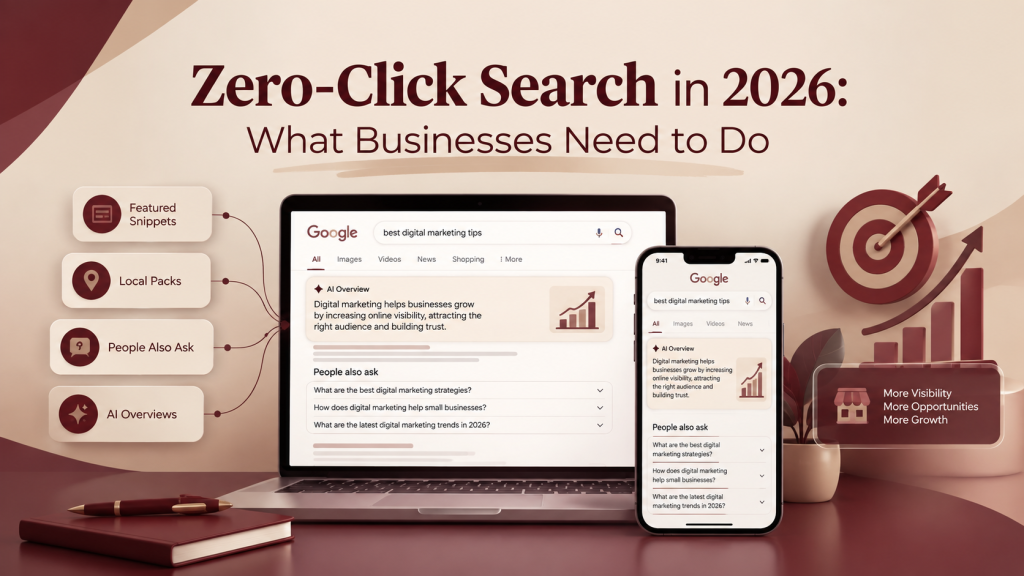
Zero-Click Search in 2026: What Businesses Need to Do

Zero-Click Search in 2026: What Businesses Need to Do Someone types a question into Google. A years ago that meant looking at a list of blue links and choosing one to open. In 2026 it often means something the answer shows up. In a snippet a box, a local listing or a short summary made by an AI. And the person moves on without opening any website. This is zero-click search. It is no longer a small thing. Research from SparkToro using Similarweb data found that 68% of Google searches in the U.S. In early 2026 ended without any click up from about 60% in 2024. That is a change, in just two years and it is happening as AI-powered search experiences grow fast. Google said at I/O 2026 that its AI Mode had already reached 1 billion monthly users with the number of questions asked doubling every quarter. None of this means search is going away. It does not mean your website is not important. It means the work of appearing in search has gotten bigger. This guide explains what zero-click search really is, why 2026 is the year it needs your focus and. Importantly. Exactly what your business needs to do about it. What Is Zero-Click Search? Zero‑click search occurs when a person finds the answer they need directly on the search results page. Through a featured snippet, knowledge panel, local pack or AI‑generated summary. Without clicking into any website. Zero‑click search does not mean the search failed; zero‑click search means the answer has moved onto the results page itself. For example if someone searches “what is a domain name ” Google shows a definition at the top of the page. The searcher receives the answer closes the tab and moves on. From Google’s perspective that is a search. From a business’s perspective that is an impression that did not convert into a visit. Unless that business’s content was the source of the answer. Zero‑click search results exist because search engines have become better, at understanding intent not just matching keywords. When a question has one factual answer there is often no need to send someone to a full page to find it. How Does Zero-Click Search Work? User Query → Search Engines Understanding of Intent → SERP Feature or Direct Answer → User Gets Information → Click Becomes Optional The exact experience that the user sees depends on factors: the type of query the device of the user the location of the user the platform such as Google Search, Google AI Mode, Bing or an AI assistant and even the time of day for things like local business hours. The search engine must interpret the query. A “what is” question behaves differently from a “best plumber near me” search, which behaves very differently again from a complex multi-part research question typed into an AI chat interface. This point is worth repeating because it is easy to oversimplify: not every query produces a zero-click result and not every SERP feature behaves, in the same way. Some searches still send plenty of traffic. Transactional comparison-heavy or highly specific queries. Types of Zero-Click Search Results Featured Snippets Featured Snippets are answers that come straight from a webpage. They can be a paragraph, a list or a table. They appear at the very top of the search results. The page that supplied the answer is shown with a link yet many people do not click through the link. Knowledge Panels Knowledge Panels are information boxes that usually sit on the side of desktop results. They give a summary of facts about a business, a person, a place or an organization. The data in these panels often comes from data and trusted sources. Local Packs / Local Results Local Packs or Local Results help people who search for “near me” or other location‑based queries. Google shows a map with business names, ratings, hours and directions. A user can call, get directions or check hours without opening the website. People Also Ask (PAA) People Also Ask sections are question‑and‑answer boxes that answer related questions right inside the results page. Definitions and Direct Answers Definitions and Direct Answers give factual responses to queries such as “what is SEO” or “what is a backlink.” These answers are short and to the point. Calculator, Conversion and Utility Results Calculator, Conversion and Utility Results include things, like currency conversion, unit conversion, simple math and other quick tools. The search engine provides the answer instantly. AI‑Powered Search Experiences AI‑Powered Search Experiences include AI Overviews and conversational AI search modes. They combine information from sources into a single narrative answer sometimes with citations sometimes without a click‑worthy link at all. Why Is Zero-Click Search Important in 2026? A few converging trends make this the year businesses cannot ignore. AI Overviews are showing up on more queries. Similarwebs 2026 analysis found AI Overviews now appear on than one in five Google searches and that number is still climbing. AI-native search interfaces are growing quickly. Googles AI Mode had over 1 billion users by mid-2026 and usage keeps growing each quarter. Search behavior is becoming more conversational. People are asking questions more often expecting a clear answer instead of a list of links. Local, mobile and voice search all want answers. A person asking “is this store open now” wants a fact, not a webpage. The strategic shift for businesses is simple to say although it needs work to do: stop treating every search as a race, for a click and start treating it as a chance to build visibility, authority and trust. Some of which gives results right away and some of which pays off later. Zero-Click Search: Threat or Opportunity? Potential Challenges Content that is about explaining what X is might get less clicks even if it appears high in search results. More companies are fighting for space in the search results pages through features like snippets, panels and people also ask boxes. Certain types of website traffic

Uncategorized

AI-Powered Marketing: Benefits, Challenges and Best Practices for Businesses in 2026

AI-Powered Marketing: Benefits, Challenges and Best Practices for Businesses in 2026 A few years ago, the idea of using data in marketing involved just checking a spreadsheet once a month; nowadays, companies are expected to understand their customers in real time, produce content faster than ever, and personalize each and every interaction—whether it’s a visit to a website or the subject line of an email. That change wasn’t the result of marketers suddenly becoming faster; it was due to AI taking on the heavy work behind the scenes. It isn’t the case that AI-powered marketing consists of one particular tool or represents a single trend; rather, it involves a wide-scale change in the way that businesses understand their customers, produce content, manage campaigns, personalize experiences, analyze data, and automate the more repetitive aspects of marketing so that people can concentrate on strategy and creativity. This change is particularly important for a small business owner in Mumbai who is running advertisements on a limited budget or for a SaaS founder who needs to nurture hundreds of leads without having a large team. The guide explains what it actually means to have AI in marketing, how it works in practice, the areas in which it is useful, the areas in which it fails, and how both large and small businesses can develop a strategy based on it responsibly. What Is AI-Powered Marketing? AI-powered marketing involves the use of artificial intelligence—such as machine learning, predictive analytics, natural language processing, and generative AI—to analyze customer data, personalize experiences, automate routine tasks, and assist in making marketing decisions. It extends beyond simple automation by learning from patterns in the data so as to make marketing more relevant and efficient over time. Traditional marketing automation is based on fixed rules, such as ‘if a customer abandons their cart, then send them email A three hours later’. AI-powered marketing builds on this by incorporating the elements of learning and prediction; for instance, it can determine which customers are most likely to respond to a particular offer, when they are most likely to open an email, or what product they are most likely to want next, on the basis of patterns in their past behaviour. A simple example is an online clothing store that uses traditional automation, which means it sends the same discount email to all customers who have abandoned their carts, whereas an AI-powered system would be able to predict which customers are price-sensitive and only require a slight incentive, and which ones are unlikely to convert no matter what the discount is, and then adjust the offer or the timing as appropriate. Firms are taking up this method since customer expectations have changed; people now expect relevant recommendations, quick responses, and content that seems tailored to them, and it’s simply impossible to provide this kind of service manually for thousands of customers. How Does AI-Powered Marketing Work? Most AI-powered marketing systems follow a core process: Data → Analysis → Prediction → Personalization → Automation → Measurement → Optimization Data: The system gathers information from places, like website visits past purchases, email responses and customer relationship management records. Analysis: Artificial intelligence looks for patterns. Which items are often bought together what kind of content people engage with and which customers might stop using the service. Prediction: Using those patterns the system predicts what will happen next. Who’s likely to buy who might leave and what messages could work best. Personalization: Content, deals or product suggestions are customized for each customer or group based on those predictions. Automation: Repetitive tasks. Sending emails, changing ad prices starting follow-up messages. Run automatically without needing someone to do them every time. Measurement: Results are tracked using business goals, not just numbers generated by the AI. Optimization: The system and the marketing team adjust the strategy based on performance data. The main idea: AI does not take over this cycle completely. It makes it faster and more accurate.. Only if the data is correct and people who know the business are watching the results. Why Is AI Becoming Important in Marketing in 2026? Here is the input from the user: A few real changes are happening, without needing to say much: AI-powered search and answer tools are changing the way people look for information making it more important for content to clearly answer questions. Tools that use AI have made it faster and easier for smaller teams to create content make images and come up with ideas. Personalization on a scale is now possible even for businesses that do not have big data science teams thanks to AI features in common marketing tools. Predictive analytics helps companies see what customers might need before it happens. Conversational experiences like chatbots and AI assistants are becoming something people expect for customer questions. These are changes, in how marketing tools are used. Not guesses about what might happen. Companies that know how to use these tools well have an edge. Ai alone does not decide success; strategy and how things are done still matter most. Benefits of AI-Powered Marketing Better Customer Personalization I observe that AI can analyze browsing behavior purchase history and preferences to deliver relevant product recommendations, content and offers rather than presenting the same experience to each visitor. Faster Content Creation I observe that AI tools can help generate content ideas draft versions, convert existing material into new formats and suggest on‑page optimizations. Human editing remains important for accuracy brand voice and genuine insight that AI cannot create on its own. Improved Customer Segmentation I observe that Improved Customer Segmentation can be achieved when AI groups customers by behavior and context—like browsing patterns or purchase timing—resulting in more relevant targeting. Marketing Automation Marketing Automation can run tasks such as sending follow‑up emails tagging leads or scheduling social posts automatically freeing up time for strategic work. Better Data Analysis Better Data Analysis is possible when AI processes larger datasets than a person can manually review, uncovering patterns that might otherwise go

Uncategorized

Why Short-Form Video Is Still Dominating Social Media in 2026

Why Short-Form Video Is Still Dominating Social Media in 2026 You open Instagram to look at one notification. Forty minutes later you’re watching a person in Jaipur showing you how to fold a saree in than a minute then a bakery in Pune demonstrating how they make their famous brownie, then a person who started a business explaining how to file GST in just fifteen seconds. You didn’t plan any of this. That’s the power of short-form video. In 2026 it hasn’t gone away. If anything, its held on even tighter to how people find brands, products and other people. Every year since Reels and Shorts became popular someone has said this type of video would get boring. It hasn’t. Peoples habits have just moved toward quick mobile-first videos and the platforms have kept adding the support. Like recommendation feeds, tools for creators and shopping features. That keeps this trend going. For companies short-form video is no longer something in a marketing plan. It’s often where a new customer first sees a brand. This guide explains why short-form video continues to get attention in 2026, how it can be part of a real business plan and what makes the videos that actually lead to sales different, from the ones that just get a lot of views. What Is Short-Form Video? Short-form video generally refers to video content built to be watched quickly — usually anywhere from a few seconds to around two or three minutes — designed for vertical, mobile-first viewing on platforms like Instagram Reels, YouTube Shorts, TikTok, and Facebook Reels. It’s not defined by a strict number of seconds. Platforms keep adjusting their formats, and what counts as “short” on YouTube Shorts can look different from what works on Instagram. What ties the format together isn’t duration alone — it’s intent. Short-form video is built to deliver one idea, one feeling, or one useful takeaway quickly, without asking for a long-term attention commitment upfront. This is exactly why it works so well on mobile devices. People aren’t sitting down to “watch a video” the way they might with a film or a YouTube tutorial. They’re scrolling, waiting for a coffee order, standing in a queue, or unwinding before bed. Short-form video meets people in those in-between moments rather than asking them to set time aside. Why Is Short-Form Video Still So Popular in 2026? 1. People Have Limited Attention Viewers make a decision about whether a video is worth their next few seconds. There is no patience for a start or a logo animation before the main point is made. Short-form video pushes creators and brands to start with value or personality away which is exactly the skill that modern audiences appreciate. 2. Short Videos Are Easy to Consume A video can fit into a lift ride a bathroom break or the two minutes between meetings. This “snackable” quality is a reason why the format continues to be popular. It does not ask for dedicated time it uses time that would otherwise be empty. 3. Social Platforms Prioritize Video Discovery Most major platforms now focus a lot on recommendation-based feeds of showing content only to people who already follow the account. That means a good short video from a business can reach people who have never heard of the brand before. The exact rules for ranking are different on each platform and change often. Its better to see this as a general move toward feeds that focus, on discovery instead of a set formula to take advantage of. 4. Short-Form Video Encourages Higher Content Consumption Short-form videos are quick to watch so people often scroll through several in one sitting. This means users spend time on the platform. For brands it means repeated exposure. Of depending on just one long video to make an impact they can show up multiple times across different short clips. 5. Short-Form Video Is Shareable Short videos move easily from person to person. They get forwarded in WhatsApp chats reshared to Stories or sent in a message, with the note “you have to see this.” When someone shares a video they’re lending their trust to it. That kind of sharing reaches way beyond a brand’s existing followers. It builds credibility in ways that paid ads simply cannot match. 6. Creators Have Made Video Relatable Creator-led content changed how video is made and seen. Now good videos don’t need high-end studios or perfect lighting. What works is people speaking directly to the camera sharing honest thoughts and connecting around specific passions. This shift makes video feel like a conversation, not a sales pitch. Audiences engage more when they feel like they’re part of a community of being sold to. 7. Artificial Intelligence Is Making Video Creation Easier Artificial intelligence tools now help with thinking of ideas writing scripts making captions editing videos adding subtitles making voiceovers and using one video to create versions for different platforms. This has made it much easier for people to create videos. It is important to be clear though that artificial intelligence tools make the process faster. They do not automatically create content that people want to watch. The idea, the hook and the honesty still need a being behind them. 8. Videos Support Social Commerce Short videos have become a real part of the shopping experience. From videos that show how something works to quick unboxings to comparison videos. It makes the distance between finding a product and deciding to buy it especially when combined with shopping tags inside the app or a clear link in the bio. 9. Short-Form Video Works Across Industries few areas are left out of this style of video. It appears naturally in: Fashion-  Tips on how to dress videos showing how clothes look new products Beauty-  Teaching how to do something showing products before and after videos Food-  How to make recipes behind the scenes in the kitchen highlights of the menu Education-  Explanations, tips for exams building skills Fitness-  Showing

Uncategorized

How to Turn Website Visitors Into Customers

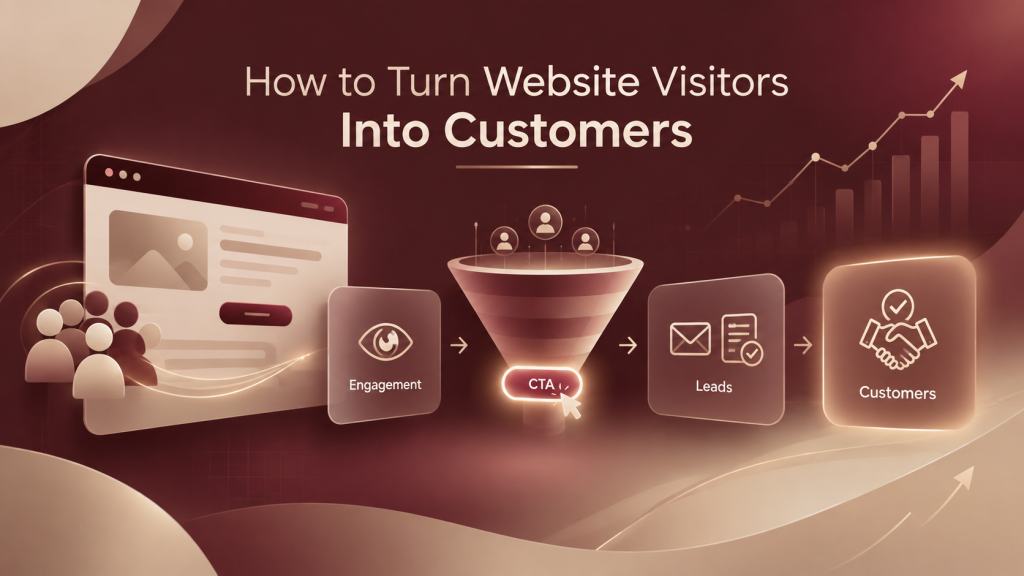
How to Turn Website Visitors Into Customers This scenario happens on thousands of business websites each day. Traffic is high. The analytics dashboard looks good. People click through from Google and media.. The phone stays silent. The inbox stays empty of orders. High traffic with conversions is a very frustrating problem for business owners. You have worked hard to bring people to your website.. They leave without buying or calling or filling out a form. That is not a traffic problem. That is a conversion problem. This guide explains how to turn website visitors into customers. It does not use gimmicks or guesswork. It uses proven, changes. It changes how your website communicates, guides and builds trust, with the people who land on it. You will learn why visitors leave without converting. You will learn what actually drives conversions. You will learn how to build a website that turns traffic into leads and leads into paying customers. What Does It Mean to Convert Website Visitors Into Customers? Converting a website visitor means guiding the visitor to take an action that brings the visitor closer to becoming a paying customer. Actions include filling out a form requesting a quote booking a call signing up for a trial or making a purchase. Conversion does not happen in a step. It is a journey: Visitor → Interested Visitor → Lead → Qualified Lead → Customer Here is what that looks like in practice: A visitor lands on your website, after clicking a Google ad. Visitor browses your services page. Reads a case study. Now visitor is an interested visitor. Visitor fills out a “Get a Free Quote” form. Visitor is a lead. Sales team talks to visitor and confirms visitor has budget and a real need. Now visitor is a lead. Visitor signs the contract. Now visitor is a customer. Every stage requires something from your website. Visitor needs clarity. Interested visitor needs proof. Lead needs a follow‑up process. Understanding this journey is the foundation of website conversion rate optimization. Why Website Visitors Don’t Become Customers Before fixing conversions it’s important to know what is stopping them. These are the common problems. Unclear Value Proposition If a visitor doesn’t know what you do who you help and why you are different within a seconds of arriving on your site they will leave. Confusion is one of the ways to lose a potential customer. Weak or Missing Call-to-Action Many websites hide their CTA use words like “Learn More ” or completely forget to tell visitors what to do next. Visitors won’t guess. They need to be shown. Poor Website User Experience Messy designs, confusing menus and unclean layouts all cause problems. Every extra bit of effort a visitor has to make is a reason for them to stop. Slow Website Speed Visitors don’t like waiting. A slow page loads makes a first impression before they even see your content. Lack of Trust Without reviews, comments or signs of trust visitors have no reason to believe you will do what you promise. Especially if they don’t know your brand. Forms Long forms with too many fields make it hard for people to complete them especially on phones. Poor Mobile Experience Since many people use phones a website that doesn’t work well on mobile will lose visitors right away. Wrong Target Audience If the people coming to your site don’t really need what you offer no amount of changes will fix conversions. The quality of traffic is just as important, as the number of visitors. Lack of Relevant Content Visitors often need information before they are ready to take action. Without content that answers their questions they will go somewhere else. Many Choices When a page has too many options, links or CTAs visitors get tired and often do nothing at all. 12+ Proven Ways to Turn Website Visitors Into Customers 1. Make Your Value Clear Your message should quickly answer four questions: What do you provide? Who do you assist? What issue do you fix? Why should someone pick you of others? Example: Instead of “Welcome to Our Agency ” a better headline would be: “We Help Local Service Businesses Get More Calls and Bookings Through Google Ads.” It is specific shows benefits and is easy to understand away. 2. Use Clear and Strong Calls-to-Action Your call-to-action should let visitors know what to do next. Good examples are: Get a Free Consultation Request a Quote Start Your Free Trial Book a Demo Get Started Shop Now Download the Guide Put your call-to-action above the fold repeat it at good places as you go down the page and make sure the button looks different and catches attention. Stay away from words, like “Submit” or “Click Here”. They do not show what is important. 3. Build Trust With Social Proof People choose to work with companies they believe in. Make sure to show trust by using: Customer reviews Testimonials Case studies Star ratings Client logos Certifications and awards Documented results User-generated content Social proof is effective because it answers the question that every visitor is thinking: “Have people like me had an experience here?” 4. Optimize Landing Pages A landing page that converts usually has: A clear headline that focuses on benefits A strong statement that highlights a specific benefit Visuals that support the message Social proof close to where the decision is made One clear call, to action A simple and short form Few distractions (no extra navigation or links) The main goal of a landing page is to lead the visitor to take one action, not many. 5. Improve Website Speed A fast website makes a first impression. Visitors notice speed before they even start reading your content. To boost performance focus on these areas: Optimize images by compressing file sizes without reducing quality. Use browser caching returning visitors load pages faster. Write efficient code to reduce unnecessary delays. Use content delivery networks (CDNs) to deliver content quickly from servers to users. Tune your

Uncategorized

SEO vs AEO vs GEO: The Complete Guide for Businesses in 2026

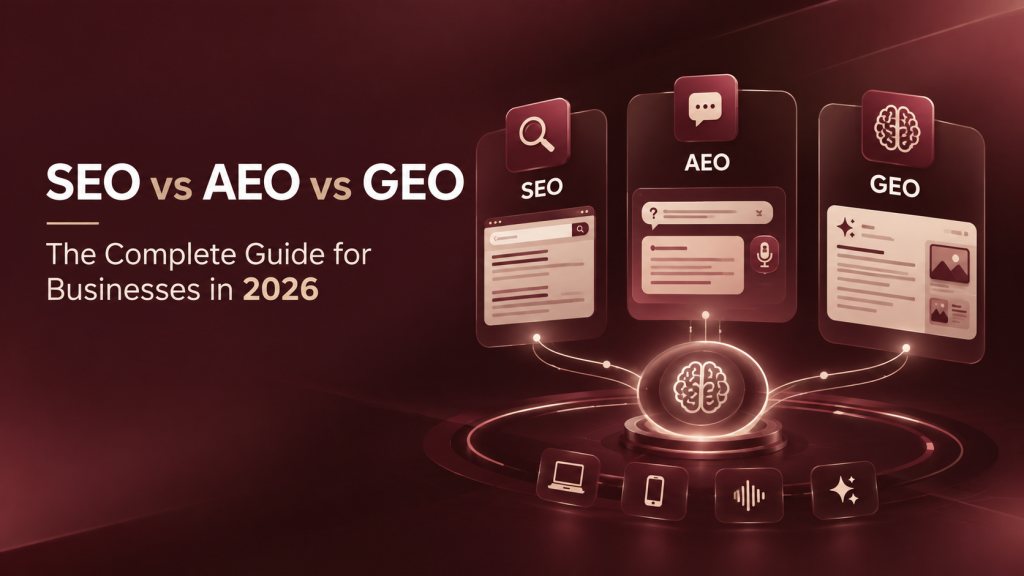
SEO vs AEO vs GEO: The Complete Guide for Businesses in 2026 Search doesn’t look like it did five years ago. It doesn’t work the way it worked when most small business owners first heard the word “SEO.” Today a customer might type a question into Google. They could get an AI-generated summary before they even see a blue link. Then they might open ChatGPT on their phone to ask a follow-up question. After all that do they land on a website. If they land at all. That change is why three acronyms now appear in the conversation: SEO, AEO and GEO. Each one reflects a way people find information.. Each one needs a slightly different kind of content and optimization strategy. This guide explains what SEO, AEO and GEO actually mean. It shows how they differ. It points out where they overlap. But most important it tells you what your business should actually do about them in 2026. There’s no hype. No promises that can’t be kept. Clear practical advice you can use right away. What Is SEO? SEO has existed for long as search engines have been around and SEO remains the base upon which every other part of this guide is built. When a person types a query such as ” accounting software for freelancers” or “plumber near me ” search engines crawl, index and rank billions of pages to find the ones that best fit that query. SEO success depends on connected parts:  Keywords and search intent- Use the words and phrases that your audience really types matched to the goal they have in mind (learn, compare or buy).  On‑page SEO- Title tags, headings, meta descriptions, internal links and how the content is arranged all of which tell search engines what the page is about.  Technical SEO. How fast the site loads, how well it works on phones how easy it is for search engines to crawl whether it uses secure connections and how clean the site structure is.  Off‑page SEO- Links, from other trustworthy sites mentions of the brand and the overall authority of the domain.  Content quality- Fresh well‑researched truly useful content that solves the person’s problem not just content that satisfies the algorithm.  User experience- How easily visitors can move around the site and find exactly what they need after arriving. If you keep all of these points straight a business will appear whenever its perfect customers are actively searching for what it offers. What Is AEO? Answer Engine Optimization, which I call AEO is the way I shape content so it can be pulled out and shown as a clear stand‑alone answer. AEO shows up in featured snippets People Also Ask boxes, voice assistants and other answer‑focused formats. AEO appeared because how people search has shifted. People no longer just type phrases like “weather Mumbai.” Instead they ask questions such as “what is the weather going to be like in Mumbai this weekend?” Voice search made this shift faster because no one talks to a speaker in broken keyword fragments. Search engines answered by creating features that give answers without needing a click:  Featured snippets that show a short answer at the top of results  People Also Ask boxes that let you expand related questions  Voice search results that the assistant reads aloud  Direct answer boxes that give facts, definitions and comparisons AEO is about writing content so that these systems can easily pull out a clean accurate answer. That usually means:  Using question‑based headings that mimic how people actually ask  Answering the question in the one or two sentences then adding detail  Adding FAQ sections numbered steps and short definitions  Building content that can stand alone without the rest of the page The main difference, from ordinary SEO is that SEO mainly aims to rank a page. AEO on the hand aims to win the specific spot where an answer is shown or spoken sometimes even without the user clicking at all. What Is GEO? Generative Engine Optimization or GEO is about making sure your content and brand are clear and easy for generative AI tools to understand. Tools like ChatGPT Google’s AI Overviews and Perplexity use this information to build answers summarize ideas or even quote sources when someone asks them a question. More and more people are finding answers through AI conversations not by clicking through a list of search results. For example if someone asks an AI “what’s the best CRM for an agency ” the AI doesn’t show ten links. Instead it creates an answer sometimes pulling in and naming a few sources it used. GEO focuses on key things: How generative AI systems discover and make sense of information about your brand or topic  Whether AI tools actually mention or cite your content when they answer a question  Brand and entity recognition. Does the AI know who you are and what you do and does it remember that consistently?  Topical authority. Do you have deep meaningful coverage on a subject or just one thin page? Trust signals. Is your content clear, about who wrote it is it accurate and does it feel credible?  Semantic and structured clarity. Is your content organized so the AI can easily see how ideas connect? It’s important to be honest GEO is still a new field. How each AI platform picks sources is not always clear. It can change over time. Different tools also work in ways. So GEO helps make it more likely that your business will be understood and possibly cited by AI systems.. It doesn’t promise that any specific tool will mention your website. SEO vs AEO vs GEO in Simple Terms If the table above feels like a lot here’s the short version: SEO → Helps search engines find and rank your content. Example: A bakery optimizes its website so it appears when someone in their city searches “custom birthday cakes near me.” AEO → Helps answer engines understand and present your answers. Example: The same

Uncategorized

AI-Powered Personalization in Digital Marketing:

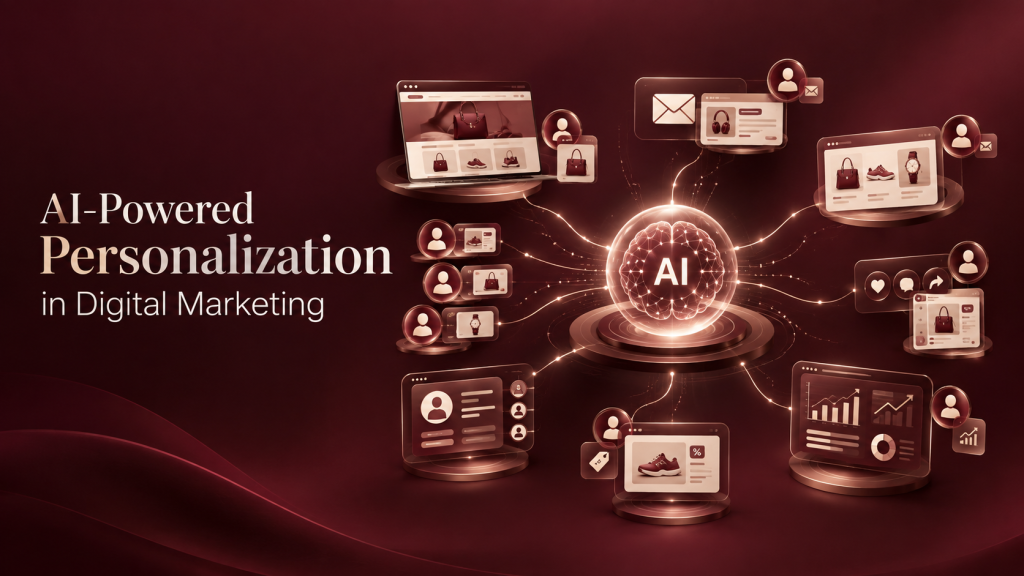
“AI-Powered Personalization in Digital Marketing” AI‑powered personalization in marketing is the use of artificial intelligence to analyze customer data—such as behavior, preferences and purchase history—and automatically deliver tailored content, offers and experiences to each individual at scale. Of manually creating segments AI‑powered personalization does this analysis continuously and in real time. To understand AI‑powered personalization properly it helps to break the term into its parts. AI (Artificial Intelligence) refers to systems that can analyze data identify patterns and make decisions or predictions— faster and at a larger scale than a human team could manage. Personalization in a marketing context means adjusting content, messaging or offers based on who the customer’s what they are likely to want. AI‑powered personalization combines the two: AI‑powered personalization systems process customer signals (browsing history past purchases, location, device, time of day and more) and use that data to tailor what each visitor or subscriber sees. A simple example: Picture two shoppers visiting the clothing website. One has browsed running shoes three times this week. The other has been looking at wear. With AI‑powered personalization both shoppers see homepage banners, different product recommendations and possibly different email follow‑ups—, without any marketer manually setting this up for each person. How Does AI-Powered Personalization Work? 1. Data Collection:- AI personalization gathers information from websites, apps, CRM systems, email interactions and ad platforms— as pages visited, time spent products viewed and past purchases. 2. Customer Behavior Analysis:- AI personalization studies this information to discover patterns: what a customer tends to browse how often they return and which actions usually lead to a purchase. 3. Audience Segmentation:- Of broad groups like “all subscribers ” AI personalization can create dynamic micro‑segments based on shared behaviors or interests and these segments update automatically as new information arrives. 4. Pattern Recognition:- AI personalization models detect recurring patterns across thousands of customer journeys—for example noticing that customers who watch a product video are more likely to buy within forty‑eight hours. 5. Predictive Analytics:- Based on these patterns AI personalization can predict behavior, such as which customers are likely to churn or which products a person might purchase next. 6. Customer Intent Detection:- AI personalization examines real‑time signals—like search terms or cart activity—to estimate what a customer is trying to do now rather than only what they did in the past. 7. Content and Product Recommendations:- Using this intent and behavior data AI personalization suggests products, articles or offers that are most relevant to that individual. 8. Automated Personalization:- Then AI personalization automatically delivers this experience—such as a personalized email, a customized homepage or a targeted ad—without manual intervention for each user. 9. Continuous Learning:- AI personalization models refine themselves over time as they receive data and feedback on what worked and what did not. 10. Performance Optimization:- Marketers can review results. Adjust strategy while AI personalization continues to optimize personalization rules, in the background. Why Is Personalization Important in Digital Marketing? Customers today want brands to know whats going on. A message that doesn’t take into account what a person already knows what they want or what they have done feels old-fashioned.. Usually gets ignored. Personalization is important because it directly impacts: Customer experience-  Messages that match real interests feel useful instead of annoying. Higher engagement-  Content that is relevant is more likely to be opened, read and clicked on. Better conversion rates-  Offers that fit what someone is looking for are easier to accept. Retention-  Customers stay longer when a brand keeps feeling important over time. Customer relationships-  Personalization shows that a business is paying attention, which helps build trust. Marketing efficiency-  Money is spent on messages that people care about, not on broad messages. Irrelevant advertising-  Customers see fewer ads for things they already bought or don’t care about. Higher customer lifetime value-  Experiences that’re relevant encourage people to come back and stay loyal. None of this needs claims. It just shows that people respond better to things that matter than, to things that don’t. AI Personalization vs Traditional Personalization AI Personalization Artificial Intelligence and Machine Learning are used to personalize customer experiences. Large amounts of customer data are analyzed quickly. Real‑time customer behavior including clicks, searches, purchases and browsing can be understood. Dynamic recommendations are created based on interests. Predicts what a customer may want next. Personalization can happen automatically at scale. Personalization adapts continuously as customer behavior changes. Personalization can be applied to websites, emails, ads, product recommendations and content. Supports individualized customer journeys. Traditional Personalization This system mainly relies on customer information and predefined rules. It often uses information such as name, age, location or past purchases. Customer groups are usually created through segmentation. Personalization is often based on fixed conditions. It requires marketers to create different campaigns or experiences. It has limited ability to predict customer behavior. Changes usually require updates, to campaigns or rules. It works well for predictable customer segments. It provides a generalized form of personalization. Types of AI-Powered Personalization 1. Content Personalization What it means: Content Personalization means showing articles, videos or messages that match a visitors interests. How AI helps: AI helps by finding which topics a visitor reads or watches the most. Example: For example a blog homepage can reorder featured articles to match a visitors reading history. Business benefit: Content Personalization can increase the amount of time a visitor spends on the site and encourage repeat visits. 2. Product Recommendations What it means: Product Recommendations means suggesting products based on what a visitor is looking at or has bought before. How AI helps: AI helps by studying patterns among customers who’re similar. Example: For example a website might show a section that says “Customers who viewed this also liked…” Business benefit: Product Recommendations can lead to an average amount spent on each order. 3. Email Personalization What it means: Email Personalization means customizing lines, contents and offers for each subscriber. How AI helps: AI helps by predicting the time to send a message and choosing the most relevant content blocks.

Scroll to Top